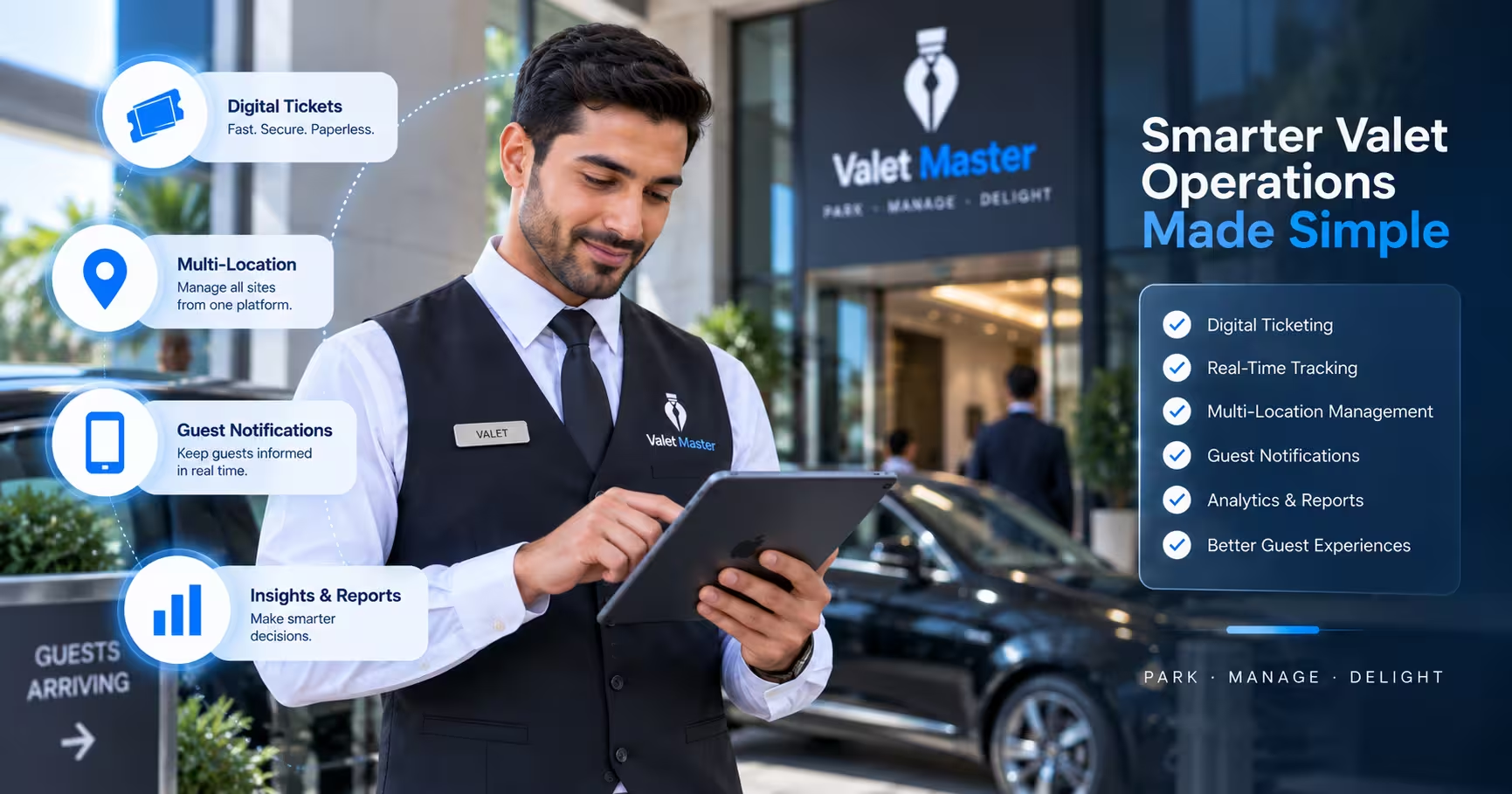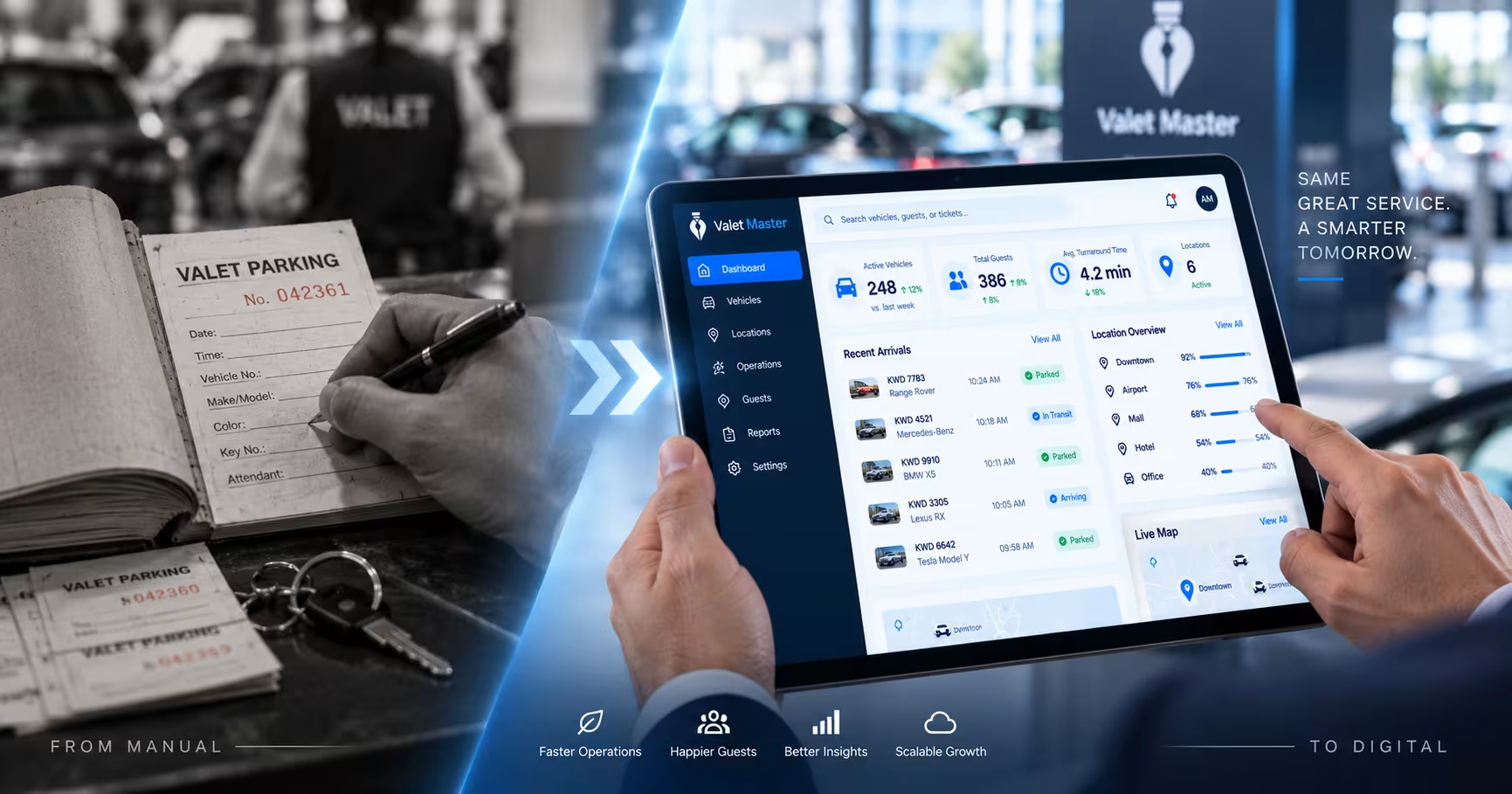
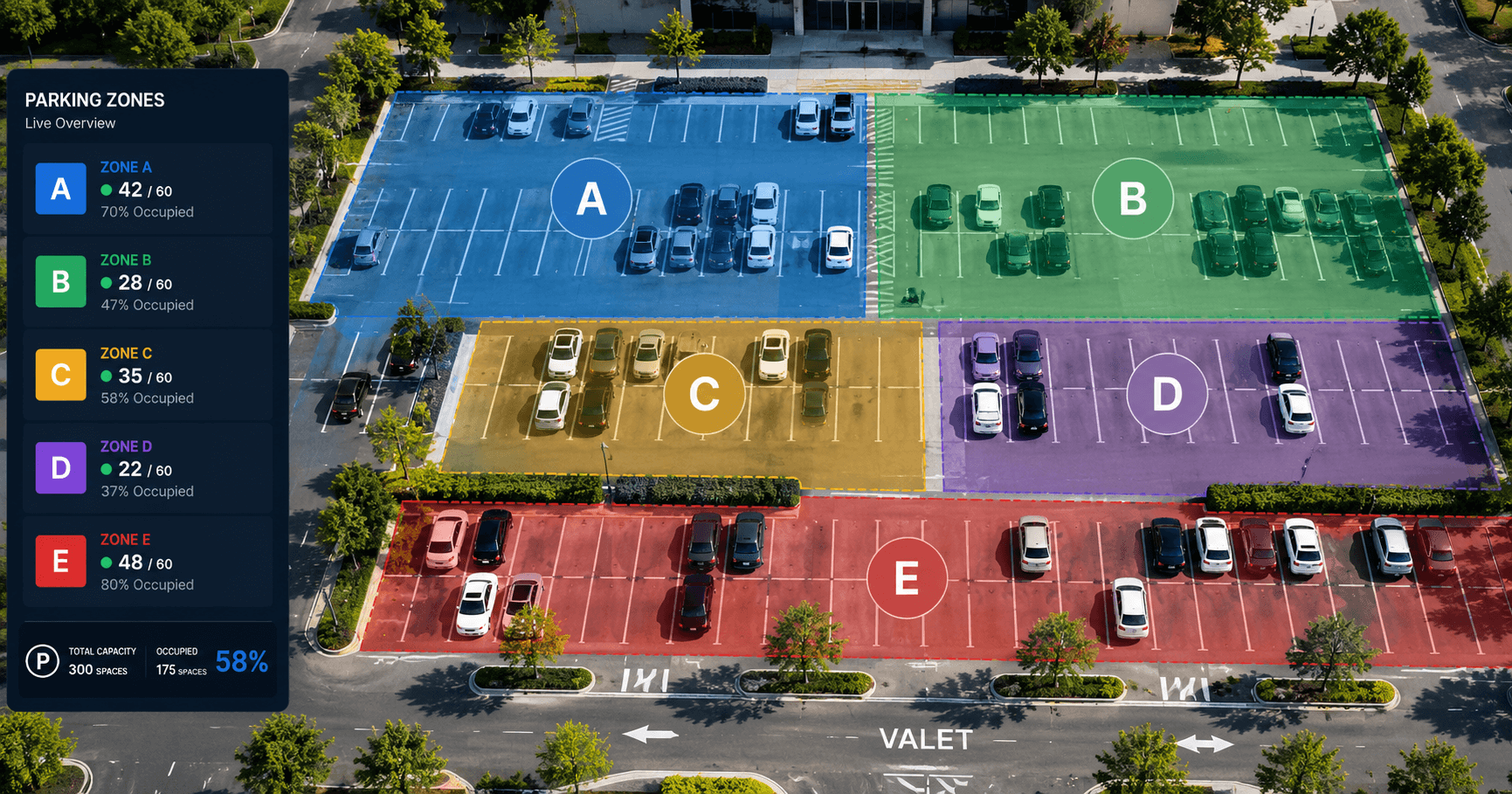
Parking zone management is one of those behind-the-scenes valet features that quietly determines how smoothly an entire operation runs. Without a structured way to organize where vehicles go, a valet lot can turn into a maze of guesswork within a single busy hour—attendants parking cars wherever there’s space, with no system for tracking what went where. Parking zone management fixes this by giving every vehicle a defined, trackable location from the moment it’s checked in.
Here’s how proper parking zone management directly improves valet efficiency, from check-in through retrieval.
What Parking Zone Management Actually Involves
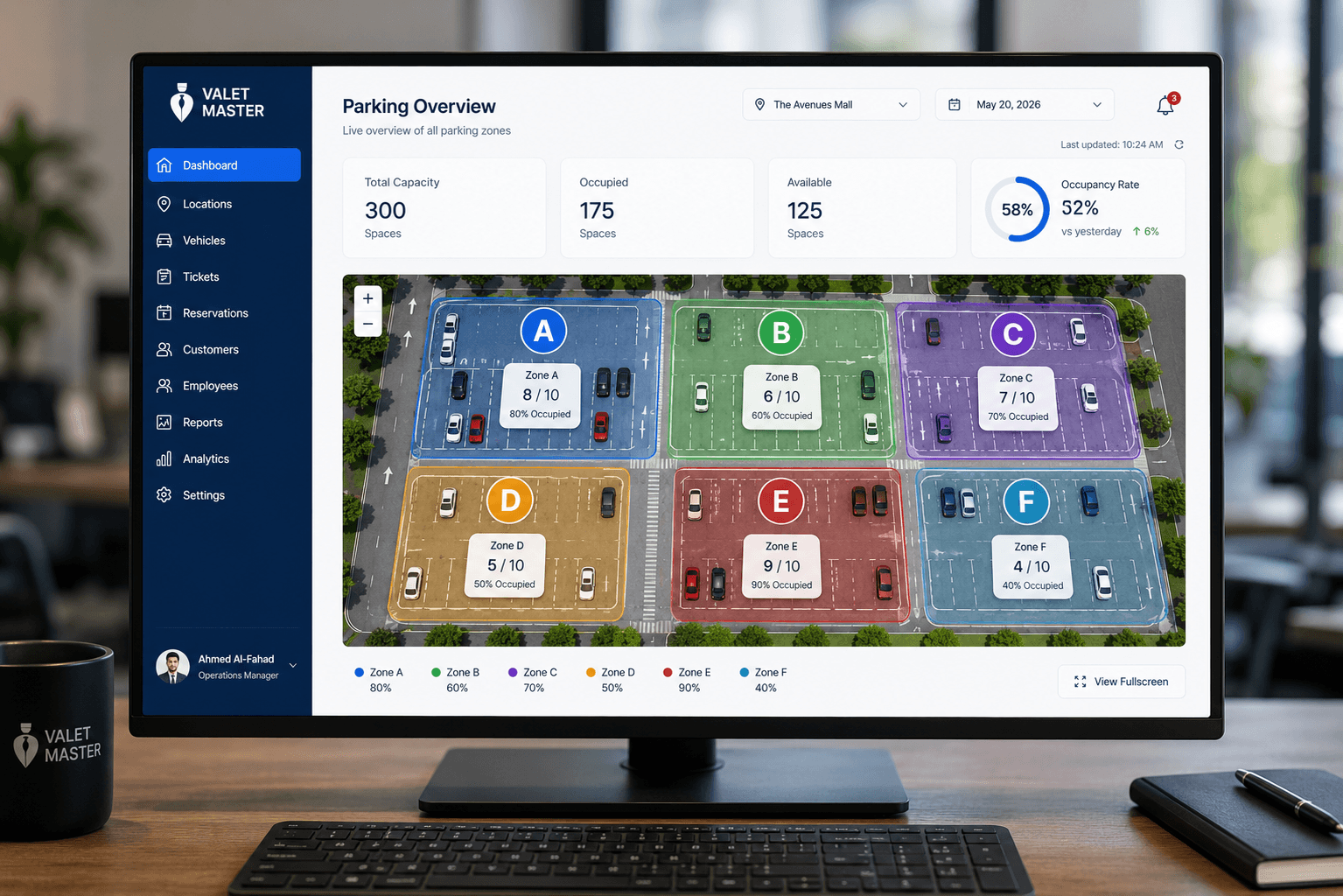
Parking zone management divides a lot or structure into defined sections, letting valet software assign each incoming vehicle to a specific, trackable zone rather than an arbitrary open space. This structure becomes the foundation for accurate real-time vehicle tracking — without organized zones, tracking has nothing reliable to reference.
Parking Zone Management Reduces Retrieval Time
When every vehicle is assigned to a known zone, attendants can walk directly to the right section instead of searching an entire lot. This is one of the most direct ways parking zone management improves efficiency, since search time is consistently one of the biggest delays in manual valet operations.
Preventing Overcrowded or Underused Zones
Without structured zone management, some sections of a lot end up packed while others sit mostly empty, wasting space and making retrieval harder than it needs to be. Good parking zone management balances vehicle distribution across zones, keeping the lot organized even during high-volume periods.
Supporting Faster Check-In Decisions
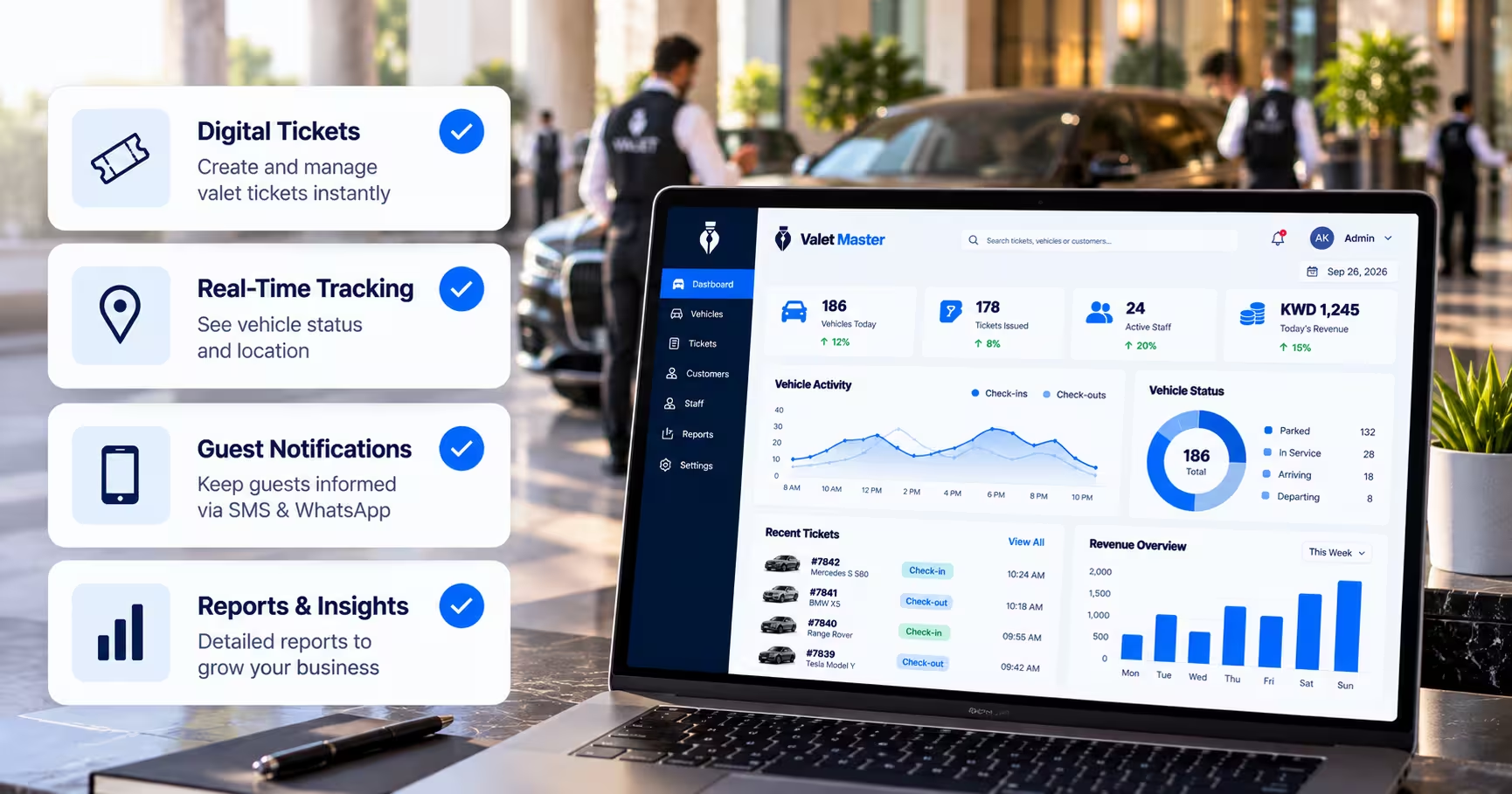
At check-in, attendants need to know instantly which zones have space and which are full. Parking zone management gives that information in real time through the cloud dashboard, removing the guesswork of walking the lot to check for open spots before parking a car.
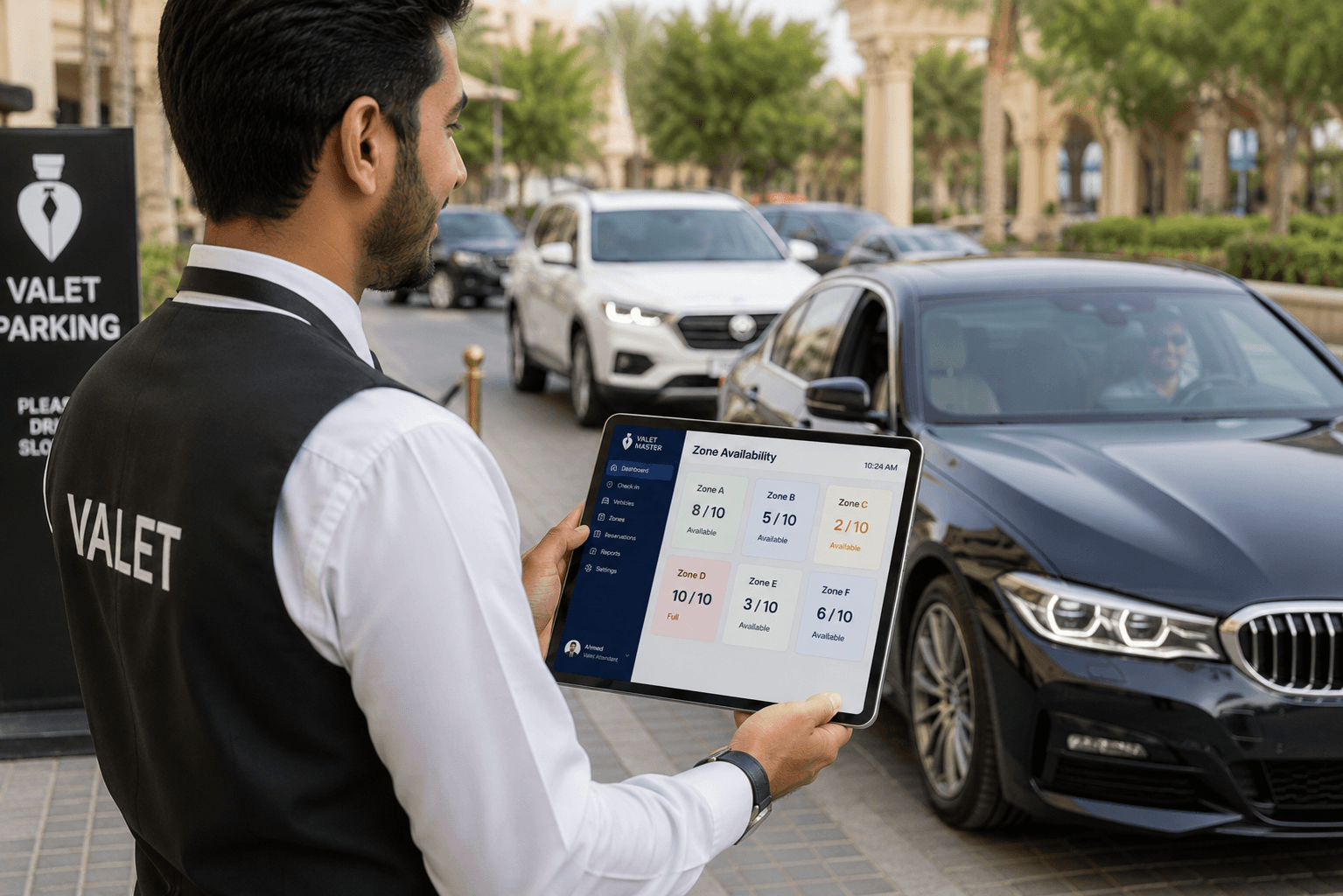
Parking Zone Management and Multi-Level Structures
Parking zone management becomes even more important in multi-level garages or structures with several separate lots. Clear zone assignment prevents attendants from wasting time checking multiple floors or areas, since the system already knows exactly which zone and level a vehicle is parked in.
Feeding Accurate Data Into Live Operations
Structured zones make live operations monitoring genuinely useful, since managers can see zone-by-zone capacity and activity in real time, rather than a vague overall vehicle count with no location context.
Better Planning Across Multiple Properties
For businesses managing valet at more than one site, consistent parking zone management makes multi-branch management far more effective, since every location follows the same structured approach to organizing vehicles rather than each site inventing its own system.
Research from the MIT Center for Transportation & Logistics highlights how structured space allocation and clear zoning consistently reduce search and retrieval time in parking and logistics operations of all kinds—a principle that applies directly to valet lot design.
Data That Helps Optimize Zone Layout Over Time
Parking zone management also generates data over time — which zones fill up fastest, which stay underused, and where retrieval times run longest. That information, visible through reports and analytics, helps management adjust zone layout or staffing to keep efficiency high as volume patterns shift.
Final Thoughts
Parking zone management might not be the most visible feature to guests, but it’s one of the most important behind the scenes. By giving every vehicle a defined, trackable location, it directly reduces retrieval time, prevents overcrowding, and gives managers the structured data they need to keep improving lot efficiency over time.
Want to see parking zone management in action? Request a free demo of Valet Master and explore the dashboard, digital ticketing, and live tracking features firsthand.